Reviewing the Artist’s Way Week 10: Recovering a Sense of Self-Protection

Cameron reminds us that we always can find our artistic direction again and again…

Week 9 provides the framework for blasting through our artistic blocks. Certain hazards, however, still exist for sustaining our creativity. Week 10 investigates how to protect our creativity by recognizing and neutralizing these threats.

Woman in armor, symbolizing self-protection.
Image by Stadnik on Pixabay.

Dangers of the Trail

Each creative person has a myriad of ways to block creativity.

Cameron starts this week on self-protection with “blocking devices” (eg, sex, drugs, food, alcohol, etc.) associated with addictions. She claims that artists with creative doubts may choose to shut down their creative flow using one or more of these blocks. Noting that these devices only become “creativity issues” when abused, she cautions us that these coping mechanisms at best assuage fears momentarily but are ineffective long term. She urges us instead to abandon this tactic. Identifying our coping mechanisms is key, as we’ll eventually take note of when we’re on the cusp of a creative U-turn before choosing to use our block(s).[*] In these instances, Cameron recommends that we employ the nervous energy generated by our artistic fears to instead create something. However, individuals who are concerned that they may have a substance use disorder or behavioral addiction (eg, gambling disorder) should seek help.

Workaholism

Workaholism is a block, not a building block.
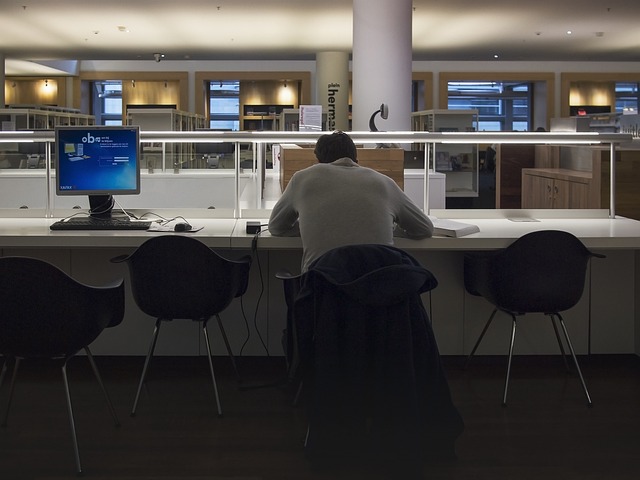
Image depicts a man working late into the evening, symbolizing workaholism.
Working too much may be perceived positively as “dedication”, but Cameron calls it harmful to your creativity. (Image by Daria Nepriakhina on Pixabay.)

Cameron then delves into workaholism, which was a recently identified process addiction (now behavioral addiction) when The Artist’s Way was published (1993). Cameron argues that working long hours represents avoidance, not “dedication”.[†] While she respects working toward “a cherished goal”, she remains concerned with how excessive working blocks “creative energy”. She, therefore, provides a questionnaire to assess our work–life balance so that we can assert more appropriate boundaries if needed. A small caveat should be observed here, as people may work too much for other reasons (eg, economic necessity, caregiving). While the dangers linked to overworking remain, the solutions are likely different.

Drought

For all creative beings, the morning pages are the lifeline…

Creative droughts represent long periods of being creatively blocked, which Cameron assures us occurs commonly in artists’ lives. However, lengthier stretches of being blocked can further compound our blocked state, because we tend to interpret the duration as a sign that our creativity is gone or never really existed. However desperate droughts may be, Cameron believes they serve the purpose of bringing us “clarity and charity” because we refuse to give up. To survive a creative drought, she suggests that we stalwartly continue with morning pages to work through our fears and find our way back to our creative path.
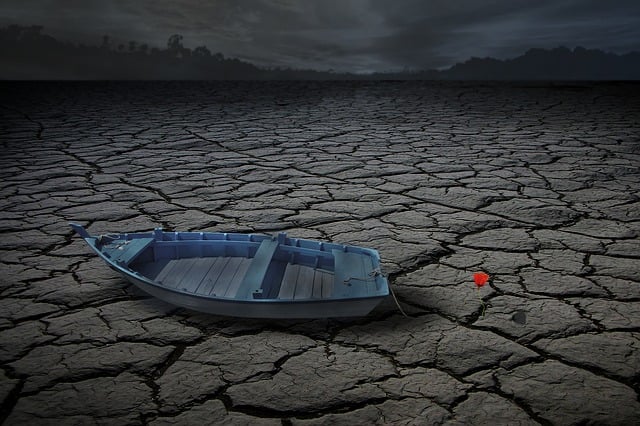
Creative droughts may leave you feeling stranded, but persevering with your morning pages can help get through them. (Image by Ralph Klein from Pixabay.)

Spiritual Drugs

Fame is really a shortcut for self-approval.

When we focus on competition…we impede our own progress.

Finally, Cameron includes two “spiritual drugs” to the ways in which we spiritually block ourselves: fame and competition. Fixating on either the desire to win (competition) or for recognition (fame) can derail our creativity because both redirect our attention from creating to comparing ourselves (usually unfavorably) to others. Fame, according to Cameron, “creates a continual feeling of lack” if we’re not recognized “enough”, while being competitive [‡] makes us monitor what sells instead of seeking our own artistic inspiration. We may even abandon nascent projects should they fail to show their potential quickly. Cameron warns strongly against this impetus, noting that even “bad work” can lead to new artistic horizons.

Cameron has theories on why people pursue external validation (ego for the competitive, fears of being unloved for fame seekers), but her antidote for both is self-approval. For fame seekers, she advises us to nurture our artist to reassure ourselves of our worth and to partake in creative play (eg, artist’s dates) to forget our craving for fame. For competitive artists, she notes that self-approval supplants the desire for others’ approval, reminding us that “showing up for the work is the win that matters.”

Competition has its uses and can be fun, but Cameron claims “a competitive spirit” is at odds with creativity. (Image by Federico Ghedini from Pixabay.)

Some Closing Thoughts

Spiritual maladies[§], as described above, are this week’s insidious creative bugbears and involve situations that may crop up during an artist’s career. Self-protection is the week’s stated goal, but building resilience is another way of thinking of it. Affirmations, morning pages, and artist’s dates are the core recommendations for issues discussed this week, all of which work towards building that resilience.
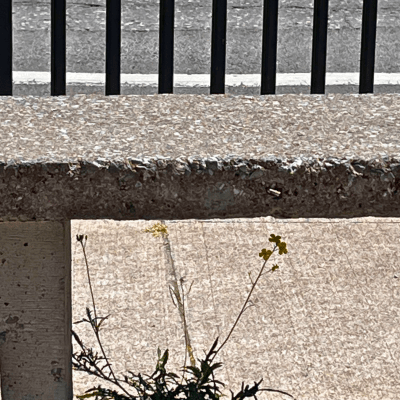
Photo of flowers growing through pavement, under a bench.
Being resilient is necessary to creative life. (Image by Rita E. Gould.)

Having said that, certain discussions about addiction gave me pause. To Cameron’s credit, she remained relatively nonjudgmental and kept the conversation centered on how self-soothing with substances/behaviors harms creativity. Equally valuable was her push for honest evaluation of worrisome behaviors, which is necessary for personal change. But I found her theory on creativity and addiction puzzling[**] and her recommendation to “use anxiety” concerning. The latter reads like “use willpower”, which isn’t necessarily the best strategy for those dealing with addiction however helpful it could be for others. As I’ve stated before, this book hasn’t had a substantive update on mental health issues. Readers should refer to recent literature or the appropriate health professionals for current thinking here.

With that said, there is one standout tenet that I’d like to emphasize from this week. Cameron reminds us that we always can find our artistic direction again and again, regardless of whether we’re derailed by life or our own blocking. It’s one of the more important points of The Artist’s Way and a good reminder for all of us wherever we are on our creative journeys.


Updated on 13 August 2024 to add captions to photos and updated a term.

NOTES:


[*]Per week 9, sudden indifference towards one’s artistic projects also signals an impending creative U-turn.

[†]Workaholism may also mask underlying psychiatric disorders.

[‡]Focusing on self-improvement is key here. While competition has its uses, less competitive people tend to be more successful in the long run.

[§]Cameron considers them to be spiritual issues as these blocks specifically stop the flow of creative energy that she defines as divine.

[**] Cameron states that “it could be argued that the desire to block the fierce flow of creative energy is an underlying reason for addiction”. For what it’s worth, most evidence seems to suggest that causes of addiction are multifactorial, with genetics playing an important role.
The 2020 Reading Review: the Books that Made the Pandemic More Bearable

Without a doubt, 2020 was a challenging year. For some, coping with these harrowing events meant finding solace in books and reading voraciously. Others, despite time freed up by social distancing, could barely turn a page. I found myself seesawing between both states. Although I didn’t meet my reading goals, I’m still happy to say that I read many books that expanded my horizons while remaining home. Even the more intense books (perhaps not the best choices for difficult times) continue to challenge me long after I closed their covers and shelved them. This year’s list, therefore, is not a “best of” list so much as a tribute to those memorable books that made pandemic reading a bit more bearable.

High Hopes: Inspirational Reads

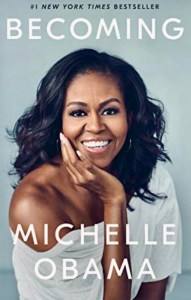
Elsewhere, I discussed Michelle Obama’s memoir, Becoming, and why I felt it was a great inspirational book to read during the pandemic. It remains among my favorites reads for 2020, because she points out the choice that we all have when it comes to viewing our circumstances. This, of course, isn’t the full extent of what Becoming brings to its audience (her life story is fascinating in its own right), but it’s something I ponder often on dark days. How does my perspective control my story? How could it be reconsidered?

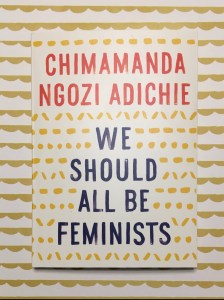
But there was another book that I read in 2020 that I found quite inspirational: Chimamanda Ngozi Adichie’s tiny tome, We Should All Be Feminists. Adichie’s book is an approachable, occasionally irreverent, and oft poignant consideration of why we, as the title states, should become feminists. Using a conversational tone (this book sprang from her 2012 TED talk), she makes the case for feminism by addressing both its baggage and the counterproductive effects of clinging to patriarchy—for both men and women. It’s difficult not to see how we’d all be happier if we strove toward gender equality.[*]

The Slowpoke Read: The Drunken Botanist by Amy Stewart

Disclaimer: If alcohol isn’t your thing, feel free to skip ahead. If you like the occasional tipple and/or enjoy science, read on.

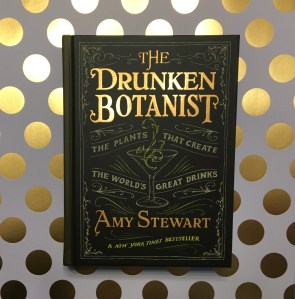
Of all the books I finished this year, The Drunken Botanist: The Plants that Make the World’s Great Drinks took the longest to read. But here’s the twist: I think it’s a feature that this book can be read over long periods. Using the familiar plant field guide format, most chapters focus on a single plant, making it easy to read a section, put the book aside, and return when you like. It proved to be an engaging way to absorb material through 2020, when I wanted to read just a bit or found myself unable to focus on reading for long stretches.

Photo of the book The Drunken Botanist by Amy Stewart. Photo taken Rita E. Gould

Format aside (the book, for the record, boasts a beautiful layout), Amy Stewart’s efforts to better educate her readers about the plants that give rise to the world’s favorite drinks are enlightening as they are entertaining, The Drunken Botanist does its best to give a broad, near encyclopedic view of the various plants (around 160, I believe) and the alcohols they produce. Often, I found myself focused more on the fascinating details involved in the research (eg, cloves are closed flower buds), not to mention the diverse disciplines she references (eg, coprolites shed information on alcohol consumption of the ancients). And did I mention the drink recipes? Stewart’s how-to, however, also extends to gardening and brewing (when feasible for folks at home), making this a rather complete approach to her topic. A careful scientist, Stewart also elucidates what’s unverifiable tales/myths, distillations best left to experts, dangerous look-alike plants, and the tragic history behind some crops and their beverages (eg, slavery, colonization). All in all, a deep, rewarding dive into botany that makes you appreciate the plants behind the bottle.

Lived up to the Hype, or Never Underestimate a Pretty Woman

I decided to read both My Sister, the Serial Killer and Mexican Gothic, because of the well-deserved buzz surrounding these novels. Both allowed me to escape the confines of my home, while I pondered their various heroine’s difficulties. They also shared a common feature: beautiful young women who people misjudge as harmless, albeit in different ways. However, both novels deftly touch on serious topics as they captivate you. I can’t recommend either enough.

Hidden Depths

In Mexican Gothic by Silvia Moreno-Garcia, the heroine, Noemí Taboada, may seem like a frivolous socialite, but this good-time girl has hidden depths. For one thing, she’s keen on earning her master’s degree in anthropology despite her family’s disapproval. The promise of furthering her studies is the carrot her father uses to persuades Noemí to travel to a remote mining town to check up on her beloved cousin, Catalina, who has sent some disturbing letters regarding her new husband, Virgil Doyle. While gothic literature isn’t traditionally set in Mexico, the transplanted Doyle family brough the requisite gloomy atmosphere from England with them. Before long, Noemí realizes something is very wrong in the Doyle’s manor and that she is becoming ensnared by it. Without giving away too much, Mexican Gothic sneaks into literary fiction as Moreno-Garcia masterfully blends serious topics (eg, racism, colonialism,) into the undercurrents of its disturbing narrative, creating an immersive, intense horror story that is difficult to stop reading.[†]

Beauty Is Only Skin Deep

After reading My Sister, the Serial Killer by Oyinkan Braithwaite, never has the platitude about the depths of beauty seemed so true. This darkly comic novel (murder shouldn’t be a laughing matter) grabbed my attention from the title through its conclusion, as I inched closer to learning what makes a beautiful woman (Ayoola) turns murderous. It’s the second mystery (I’ll get to that), however, that made me eager to turn the pages.

Through the older and less lovely sister, Korede, we learn about Ayoola’s unconventional method for managing her man problems. Korede, long made responsible for her sister’s action and well-being, seethes as her sister’s looks let her escape Nigerian cultural expectations of women (eg, cooking[‡]) and the consequences of her actions. Ayoola, long accustomed to deference, expects her older sister to clean up her messes, murder included. Korede, of course, does just that with her usual competence. Work is nurse Korede’s only refuge, where she longs after a handsome doctor, Tade Otumu. Here, too, is her only confidant: a comatose patient in whom she confesses the truth about Ayoola’s exploits. But her sanctuary soon evaporates when Ayoola pays a visit. Before long, Tade is dating Ayoola and her patient, once expected to die, awakens. Korede, in a quandary between two loves, needs to make a choice.

Braithwhite’s searing commentary, focused on female beauty, exposes the misogynistic undercurrents of how societies value women. Korede, the more compassionate and competent sister, is often overlooked, and she can’t even criticize Ayoola without being dismissed as jealous. But Braithwhite carefully shows how beauty isn’t always a blessing. Ayoola’s enjoyment of her halo effect doesn’t hide how the emphasis placed on her looks has damaged her, as she lacks empathy, fails to grasp proper behavior on serious occasions, and holds an understandably cynical view of men (“…a pretty face. That’s all they ever want”) who value her looks but know nothing of her interests or talents. Considering the good fortune showered on Ayoola for existing while beautiful, there is some mystery behind her evolution into a literal mankiller. But the more compelling question is why Korede continues to helps her, given her resentment and horror. The answer to both questions lies in their shared history and bond as sisters.

The Reading Year Wrap Up

This year’s reading, whether disturbing (We Need to Talk About Kevin, The Perfect Nanny [alternative title, Lullaby]) or comforting (all the Rick Riordan books I read with my kiddo), often served as a connection point with the outside world, one that patiently waited for me when the current events left me too tired to read. While it might seem activities like reading should be a lower priority during troubling times, I can’t help but think how much art, music, books, television, etc., served as a balm whether I needed mindless distraction or a reminder that were bigger things besides my own cares. Art matters, particularly when life is difficult. As 2021 will continue (at least for now) where 2020 left off, I plan to stock up on few books (in addition to this year’s Christmas haul). Whether the coming year brings good news or not, I hope to have a good book on hand.

Happy reading, all!

NOTES


[*]I would be remiss to ignore Adichie’s controversial remarks about transwomen, even though they do not appear this book. While she later clarified her statement, it’s important to understand why her remarks missed the mark so that we do a better job of making feminism more intersectional.

[†] I stayed up to the early hours to finish this book, and it did not disappoint. Read here for a more in-depth analysis of the book and interview with the author, Silvia Moreno-Garcia.

[‡]And, you know, letting boyfriends live.