
Fiction and The Versatile Hobby Part I: Characterization and Theme Exploration

Depending on how a writer employs character hobbies in their narrative, these pastimes can influence the characterization, setting, plot, and thematic elements.

Sufficiently realistic characters are part of fiction’s great juggling act—its need to appear plausible enough for readers to suspend their disbelief and engage with the story and its emotional truths. When writers develop their characters, they provide them with relationships (friends, family, lovers, etc), careers, backstories, hobbies, and so forth to achieve this verisimilitude. Of these items, I find how writers use hobbies in their stories fascinating because hobbies can serve many purposes besides filling out a character’s biography sheet. For example, hobbies[*] (to paraphrase what I’ve said elsewhere) often serve as a shorthand form of characterization because they can reveal aspects of the character’s personality through their interests. Depending on how a writer employs character hobbies in their narrative, these pastimes can influence the characterization, setting, plot, and thematic elements. In this first of two parts discussing the role of hobbies is fiction, I’ll take a look at the clever ways in which writers use hobbies to develop characters and explore theme. Part II will look at the roles hobbies have in establishing the setting and forwarding plot.

Rounding out Characters

Fiction and The Versatile Hobby Part I: Characterization and Theme Exploration. Text by Rita E. Gould
We may not know how Sylvia Keene plays tennis, but we know she looks good doing it.

As I’ve implied, the primary role hobbies play in fiction involves characterization. The degree to which they inform the text about the character, however, varies. Providing biographical details is an excellent way to flesh out relatively minor characters. Sylvia Keene, a young woman discussed in Agatha Christie’s short story “The Herb of Death”, played tennis. This detail is mentioned as part of a brief “verbal portrait” provided by characters (Arthur and Dolly Bantry) who are discussing the circumstances of her death. Arthur observes she played tennis gracefully, which (along with youth and good looks) was part of her charm. In this regard, tennis reveals Sylvia’s characteristic grace but tells us little else about her. Similarly, a hobby might confirm or provide additional evidence of a character’s known interests. Librarian Polly Duncan, love interest to James Qwilleran (the main human character) from The Cat Who series, is an avid reader, a detail that merely confirms the bookishness her career choice suggested.

Characterization and Themes

Fiction and The Versatile Hobby Part I: Characterization and Theme Exploration. Text by Rita E. Gould
This angler ensures they don’t disturb the fish by leaving the area.

However, hobbies frequently provide readers with greater insights into the character’s personality and their behavior. Some hobbies tend to be associated with certain types of behavior or personality types. Angling, for example, is associated with quietness because it’s alleged that fish avoid noisy spots. Hobby stereotypes also exist: stamp collectors traditionally are thought of as reclusive and nerdy. Since these expectations exist, writers can use them to signal the character has certain traits or tendencies.[†] In The Lovely Bones,[‡] author Alice Sebold initially presents Jack Salmon as a father dealing his daughter Susie’s disappearance/murder. When Sebold introduces his hobby, readers gain insights into Jack’s personality and the family’s dynamics as she explore the novel’s themes.

Personality

A few weeks after Susie’s death, Jack enters his den to clean it up as part of an effort “to move forward” (45). As Susie (the narrator) explains, Jack’s den is where he either reads or builds miniature ships in bottle after work, with Susie often acting as his assistant. Sebold’s choice of hobby hints at traits Jack possesses. Since building these bottles requires painstaking effort, we’d expect anyone who attempting this hobby to be patient and meticulous. Susie confirms this impression by noting he “he counted numbers—due diligence” for an insurance company (45). Based on this description of Jack (reading, ship building, number crunching), readers might expect him to be typically quiet and mild mannered.

Family Ties

Susie also informs readers that Jack learned how to build these ship from his father, but she was the only other person in his own household who shares his love of these ships. Jack makes several failed attempts to entice his other children into building ships with him, demonstrating how important sharing this hobby is to him. Jack’s success with Susie also lets Sebold show readers that Susie shares some of her father’s qualities. As an amateur photographer who dreamed of becoming a wildlife photographer, she possesses that same careful patience—whether it’s holding the bottle while waiting for the ship sails to rise or catching the right moment to snap a photo. Obviously, this activity represents a bonding experience, one which likely held greater significance for Jack given that no one else wanted to spend time working on these boats with him. In some ways, losing Susie means Jack loses someone who understands this side of him.
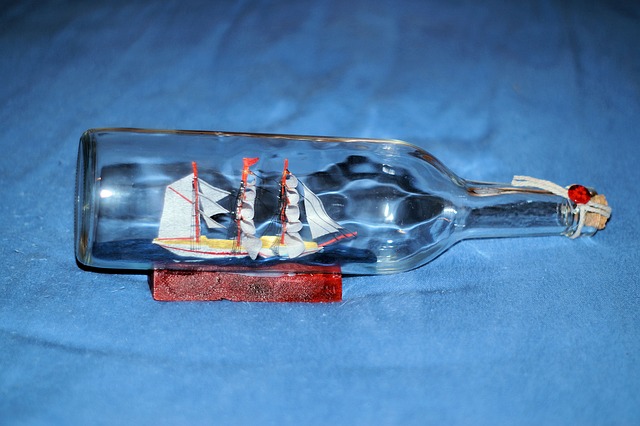
Fiction and The Versatile Hobby Part I: Characterization and Theme Exploration Text. by Rita E. Gould
Jack Salmon’s hobby lets him connect with oldest daughter, Susie.

Exploring Theme

Jack’s mission to clear away his treasured ships—now painful reminders of Susie—takes a violent turn as he begins throwing and crashing them against the walls. The symbolism here is evident: the bottles are as shattered as Jack’s world. Sebold, of course, could have chosen to have Jack break anything to demonstrate his emotional turbulence. Destroying his treasured ships, items so closely associated with his murdered daughter, is a more poignant choice: nothing else but his tremendous grief could have prompted Jack to ruin them—or arguably provoked such violence from him. As loss and grief are among the novel’s central themes, Sebold’s inclusion of this scene is brilliant because it lets us see how Jack’s emotional landscape altered in response to Susie’s murder. His reaction to her loss, his grieving, involves fury that she was taken suddenly and violently. It also prepares readers for a future occasion when Jack’s grief and anger erupt again, this time with greater ramifications.

Having shown Jack’s emotional state and prepared readers for other instances what otherwise would have been out-of-character behavior, Sebold could have abandoned further mentions of ships, letting them remain casualties of Jack’s grief. Instead, she revisits Jack’s hobby one last time to beautifully illustrate Jack’s progression through the stages of mourning. Years later, Jack learns his other daughter is expecting a child and dreams of teaching another child to share his love of these ships, even as he knows that doing so will always remind him of his lost child. While Jack will never stop missing Susie, he has accepted her death and is now truly moving forward as best he can. In this moment, we see all the novel’s themes—loss, grief, and love and acceptance—tangled in Jack’s humble hopes for the future.

Sebold’s thoughtful use of Jack’s hobby shows some (though not all) of the more complex ways a hobby can influence a story through characterization: it suggests his personality (supported by career choices and other pastimes), show us how his hobby connects him or distances from family, reveals how grief changes him, and how acceptance reconnects him to himself. In part II of “Fiction and the Versatile Hobby”, I’ll examine the roles, both small and great, hobbies play when we consider story settings and plot.

Next week, Fiction and The Versatile Hobby Part II: Setting and Plot

NOTES:

[*] Countless activities can be considered hobbies, ranging from sports to collecting. There are crossovers between hobbies and professions (an amateur painter versus the professional), with some people occasionally even supplementing their primary income with earnings from such pursuits and others managing to translate a hobby into a career (the home cook turned professional). However fine these distinctions may be, generally the hobby is the one that earns less, is conducted only in one’s spare time, and would not be considered as an occupation by its practitioner.

[†] Or to contradict stereotypes!

[‡] Sebold, Alice. The Lovely Bones. New York: Little, Brown & Company, 2009.

Loneliness and Grief in Yoshimoto’s Kitchen

“I got dressed to begin another day. Over and over, we begin again.”

The heart of the home truly is the kitchen for the young protagonist of Banana Yoshimoto’s debut novel Kitchen (translated by Megan Backus). University student Mikage Sakurai loves kitchens, which become her refuge when the death of her grandmother making her an orphan twice over.[*] Stunned by her utter solitude (“It’s total science fiction. The blackness of the cosmos.”), she only can sleep next to the humming refrigerator. Other obligations also press on her. While her grandmother left her money,[†] she nonetheless must downsize her apartment to stretch her funds. Still grief-stricken, the thought of moving and house hunting paralyzes her. Fortunately, Mikage also inherits her grandmother’s friendship with Yuichi Tanabe. Yuichi, a younger university student, works part-time at the floral shop her grandmother frequented. He and his mother, Eriko, offer a much needed respite by opening their home to Mikage, complete with a beautiful kitchen (“It was a good kitchen. I fell in love with it at first sight”).

Grief, Connection, and Magic

Yoshimoto’s novel (as well as its novella companion “Moonlight Shadow”)[‡] contemplates grief and loneliness with a delicate touch. While these emotions predominate, they are offset by moments of joy and connection. Yoshimoto uses light and dark imagery symbolically to reinforce these feelings: in the novel’s second half, “the telephone was glowing” in Yuichi’s mind whereas Mikage felt the line to Yuichi was submerged in deep, dark water, respectively suggesting his need for her companionship and her recognition of his grief. Part of the novel’s charm in negotiating such difficult topics involves its subtle use of magical realism that confers an almost fairy-tale quality to the story. Yuichi appears at just the right moment to offer Mikage a place to live while she sorts out her affairs. Both young people share a remarkable dream that takes place in the grandmother’s now empty kitchen, in which Yuichi implores Mikage to stay at his family’s apartment. Mikage even intuits which hotel room belongs to Yuichi before scaling the wall to deliver him katsudon. (This latter example also represents a brilliant gender role reversal, as Mikage plays—albeit comically—the traditionally male role of rescuer for a distressed Yuichi.)

Katsudon
You had me at katsudon. (Yōfū Katsudon [Western-style pork cutlet on rice] at Nagaoka, Niigata Prefecture, Japan. Siriusplot at Japanese Wikipedia. CC-BY-SA-3.0-migrated.)

Transformations

However magical her delivery may be, Yoshimoto does not shield her characters from pain. Eriko explains hers (and the novel’s) philosophy to Mikage: we must experience “true despair” to understand joy. Mikage also comes to accept that, even when we are with others, we are always alone. While she despairs that we’re “always defeated”, this knowledge lets her live more fully. Grief, therefore, is transformative in Kitchen. Having discovered a passion for cooking while living with the Tanabes, Mikage leaves university and successfully embarks on a cooking career despite her limited qualifications. Eriko’s own experience of grief literally changes her. Watching his wife slowly succumb to cancer forced Eriko to understand that “the world didn’t exist for [his] benefit”.[§] Becoming aware that he disliked being a man and realizing he would never love again, Eriko transitioned to a woman and opened a gay nightclub,[**] thereby straddling roles of provider and nurturer. Her story essentially serves as a loose guide for Mikage who also bridges these roles: cooking is her profession but it is one that nurtures.

The kitchen, of course, serves as an extended metaphor throughout this novel, representing that which sustains people through terrible loss, both in terms of sustenance (food, nourishment) and refuge. Kitchen creates this space as a haven for healing and connection, perhaps even new beginnings. And it’s this uplifting spirit that makes Kitchen a story that satisfies indeed.

NOTES:

[*] Mikage’s grandparents raised her after her parents died. Her grandfather subsequently died while she was in junior high school. Hence, she’s doubly orphaned by losing two sets of guardians.

[†] Discovering an orphaned character who isn’t destitute is a pleasure.

[‡] “Moonlight Shadow” (also translated by Megan Backus) typically accompanies Kitchen. My focus here is on the larger work.

[§] My pronoun usage mirrors that of the novel, using female for post-transition and male pronouns for pre-transition Eriko (formerly called Yugi).

[**] It’s worth observing that most characters seem to respect Eriko’s gender identity, even though it’s mentioned on occasion that Eriko is “really a man”. Given that Eriko’s fate is common for transgender women, a content warning is appropriate.


Finding the Heart of Flawed and Difficult Characters: Empathy through Emotional Truth

How do we make someone whose actions are unpalatable worthy of readers’ empathy? We give them the emotional truth of the character’s situation.

In the afterword of The Bonesetter’s Daughter, author Amy Tan discusses the novel with friend, editor and fellow author, Molly Giles. Tan, known for using autobiographical elements in her stories, indicates that she chose to depict the “emotional truth” of her experiences opposed to fictionalizing actual events. Emotional truth resonates with me, both as reader and writer, because that frisson of honest feeling connects character to reader. Regardless of a story’s inspiration (eg, writer’s life, historical events, imagination), we want our readers to be engaged with our characters’ struggles. Some characters, of course, earn a reader’s regard with ease because their difficulties are readily observed and understandable. Orphaned children, as I noted in a different post, generate instant sympathy because of their youth and built-in disadvantages. The greater difficulty, however, lies in making less likeable characters sympathetic. How do we make someone whose actions are unpalatable worthy of readers’ empathy? We find ways show readers the emotional truth of the character’s situation.

It’s in the Details: Wording and Pacing

Writing about a difficult character’s emotional truth requires some finesse. Stating directly (through exposition or dialogue) that the character’s grief (for example) causes them to be antisocial lacks impact, particularly when the story relies heavily on that character’s perspective. Readers need insights into problematic behavior, so that they can relate to troubled or outright unlikable individuals. In The Girl on the Train, the musings of Paula Hawkins’s flawed primary protagonist and narrator, Rachel,[*] immediately provide small but revealing details [†] about her emotional landscape. We are alerted to the importance of these details by the word choices Hawkins employs.

On a morning train to London, Rachel observes clothing left next to the tracks when the train stops at a signal. Imagining reasons for their presence (including her allusion to a potentially sinister scenario), Rachel states that both Tom and her mother thought she had “an overactive imagination”. The negative connotation of this assessment hints that Rachel is perhaps unreliable, and she seems to tacitly agree with their judgement when she explains she cannot help but wonder about “the other shoe”. Hawkins word choices for the clothing—“discarded” and “abandoned” instead of a more neutral “mislaid”—suggests Rachel’s emotional viewpoint: she sees through the lens of rejection (she’s the lost shoe).[‡] As the train finally moves forward, Rachel desperately tries to focus on her newspaper, suggesting that she is avoiding some emotional trauma even as her mind wanders back to the lost items (the stand-in for herself). At this point, it difficult not to feel some pity for this sad woman.

Heart_difficult_characters_liquorHaving subtly established Rachel’s feelings of abandonment and her unwillingness to address her pain, Hawkins exposes another side to Rachel. On the return trip later that day, Rachel drinks canned gin and tonic (“the taste of my first-ever holiday with Tom”, a man now mentioned twice and likely her “other shoe”), claiming (with a whiff of belligerence) she doesn’t “have to feel guilty about drinking on the train” since it’s Friday. Obviously, she does feel guilty despite her attempts to justify her behavior. Before she states she’ll be facing a beautiful weekend alone, the reader can surmise that Tom left her and she is drinking to cope with her pain.


As the first chapter progresses, the extent of Rachel’s drinking problem (and its role in her relationship’s dissolution) becomes evident: she pretends to go to work so her friend/landlord won’t discover she lost her job, she drunk calls her remarried ex-husband late at night, and recounts her shameful history of violent, drunken arguments. Had Hawkins first shown Rachel’s self-destructive behavior or how she lies and harasses people, readers could have dismissed her as an angry or pathetic drunk (as many characters in the novel do) and failed to see her fragility and remorse. While it’s impossible to overlook Rachel’s failings or trust her judgement, we cannot help but feel sorry for the mess her life has becomes, even as she embroils herself in a missing persons case.

How It’s Told: Narration and Character Voice

Hawkins paces her revelations about Rachel to lets readers appreciate her humanity before discovering her grievous faults in The Girl on the Train. Tan’s approach in The Bonesetter’s Daughter also involves controlling the reader’s early impressions of a difficult character, although Tan uses narration as her tool. LuLing Liu Young is not novel’s protagonist but her daughter is. Since Ruth narrates more than half the novel, her perceptions of their contentious relationship will influence the reader’s opinion of LuLing. Tan, therefore, has LuLing narrate the preface—a tactic that lets LuLing speak in her own voice,[§] without Ruth’s experiences overshadowing hers.

Luling’s account, however, starts as relatively straightforward exposition[**] and she states what she “knows to be true”: her name, those of her two deceased husbands (“our secrets gone with them”), and her daughter’s name along with a brief explanation of how she and her daughter are alike but opposite. While the casual mentions of secrets and possible opposition foreshadow some of the novel’s central problems, LuLing’s interest remains focused on names, in particular the one that eludes her repeated efforts (“a hundred times”) to recall it. Although she seems mildly frustrated (as most people are in such instances), she proceeds to vividly recounts the morning when Precious Auntie (a family member or perhaps her nursemaid) showed her surname to LuLing.

heart_difficult_characters_calligraphy

At this point, Tan uses narrative disruptions to strip away LuLing’s collected veneer and destabilize this “truth”. Still unable to recall the name Precious Auntie told her to never forget, LuLing abruptly breaks off her tale mid-sentence and claims she’s reviewed over “a hundred family names” to stir her memory. Earlier, the use of “hundred” seemed to be mere hyperbole; Tan’s repetition here highlights LuLing’s increasing agitation. Mentions of more secrets and other lost items also raise concerns about her memory. LuLing, switching topics again, now shares that she remembered the trunk containing her prized possessions for “so long [she] nearly forgot [she] had them”. When she opens the trunk, she discovers its contents were destroyed by insects. Devastated, she claims she’s lost everything she loved, with her greatest loss being Precious Auntie’s name.

Abandoning her account of “Truth” altogether, LuLing now implores the ghost of Precious Auntie to help her remember their name before asking the deceased woman if she remembers that she is her daughter. This last revelation is particularly astonishing because LuLing referred to another woman as “Mother” in her story about the lost surname. Whether LuLing is conflating the two women or inadvertently revealing who her mother truly is, her anguish at losing pieces of her past as her memory fails is apparent and we cannot help but feel her pain. Tan’s clever use of narration gives readers a glimpse into LuLing’s emotional world and effectively establishes sympathy for her before we meet her as the dissatisfied, argumentative and cantankerous woman Ruth calls mother.

The Core of Empathy

In fiction as with real life, it’s easy to empathize with the trials of those we like. Yet, difficult and troubled characters are perhaps those who need our empathy most, however off-putting they may be. Tan and Hawkins demonstrate how revealing a character’s emotional truth lets readers see past the labels defining them. As writers, our task is to find ways that guide readers to the core of these character’s humanity and challenge them to care.

NOTES:

[*] Hawkins’s novel is told through alternating perspectives of three women.

[†] Details about a character’s inner life are doubly crucial in a psychological thriller.

[‡] Rachel’s mention of “the other shoe” similarly evokes separation since shoes come in pairs, just as mentioning “the feet that belonged in them” also suggests dispossession.

[§] Being able to speak in her own voice is also important because English is not LuLing’s first language.

[**] We later discover that “Truth” is a document that she wrote for Ruth (who cannot read the Chinese calligraphy) some five or six years before the opening chapter and that Ruth hasn’t attempted to translate it yet.

The Slipperiness of Resolve: the Mid-Year Reading Resolution Check-In

But why haven’t I finished several books I fully intended to read just yet? Simply put, other books beckoned.

The Slipperiness of Resolve: the Mid-Year Reading Resolution Check-In Text by Rita E. Gould
How do your reading resolutions stack up against your to-read list?

Following weeks of temperatures in the 90s and 80s, January’s cold seems distant as I contemplate the resolutions I made in that darker month. The resolutions in question, of course, are reading ones. With more than half the year gone, I reviewed the list of books I planned to read. Surprisingly, I discovered that I read exactly two books listed, with a third started (Beloved by Toni Morrison). A number I might find disappointing, had I not read (and wrote about) several other books since the list’s genesis.

The Power of Other Books

But why haven’t I finished several books I fully intended to read just yet?[*] Simply put, other books beckoned. I belong to online book groups that discuss a few novels every month. These books tend to inspire blog posts, so I place them a bit higher on my reading queue. I also visit my local library to encourage my child’s burgeoning reading habit.[†] Browsing the shelves allows me to find fascinating books I might not have otherwise encountered (The Strange Library by Haruki Murakami).[‡] There’s also my own evolving reading goals: books I want to read for an upcoming trip, books gifted to me, and other projects that pop up (the #readingwomenmonth, to name one).

Weaker Resolve

In the interest of strict honesty, there are a few books I’ve delayed reading or finishing. Whether the book’s density or subject matter required more attention than I could provide, I returned these to the “to-read” stack. For now. Some books I forgot I wanted to read because I made the list so long ago. Other books I put aside because they didn’t suit my reading environment. When I want to read in a car or at the pool,[§] I like reading something that can be interrupted and readily resumed again. And finally, there’s a few books I wanted to see as a movie first, because I suspect I won’t enjoy the movie quite as much if I read the book beforehand (Sorry, The Life of Pi by Yann Martel).[**]

The Slipperiness of Resolve: the Mid-Year Reading Resolution Check-In
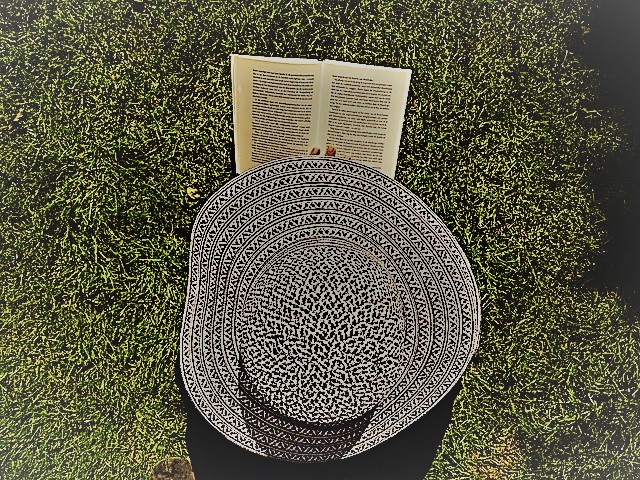
I’d like to read Les Misérables at the shore, but the splashing is too distracting.

Reading On

For all that I haven’t yet read, I’m so close enough to achieving the reading goal I set for myself on Goodreads that I will likely increase it. In the spirit of getting there eventually, I’m updating my list with the hope that I get to my unread books—along with several new additions to my list.[††] Included, too, are books I’ve read. Feel free to check links to books I’ve discussed in other posts. As always, happy reading!

2017 To-Read List

The Good Thief by Hannah Tinti (in progress)

Beloved by Toni Morrison (in progress)

Imagine Me Gone by Adam Haslett (in progress)

The Girl on the Train by Paula Hawkins

Human Acts by Han Kang (Translated by Deborah Smith)[‡‡]

Life of Pi by Yann Martel

Gone Girl by Gillian Flynn

Howard’s End by E. M. Forster

The Secret Life of Bees by Sue Monk Kidd

Bad Feminist by Roxanne Gay

Les Misérables by Victor Hugo

Take Off Your Pants! Outline Your Books for Faster, Better Writing by Libbie Hawker

The Yiddish Policeman’s Union by Michael Chabon

Do Not Say We Have Nothing by Madeleine Thien

2017 Read List[§§]

The Ocean at the End of the Lane by Neil Gaiman

Big Fish by Daniel Wallace

The Help by Kathryn Stockett

The Immortal Life of Henrietta Lacks by Rebecca Skloot

All the Living by C. E. Morgan (read about it here and here)

Two Old Women by Velma Wallis

A Cold Day for Murder by Dane Stabenow

The Color Purple by Alice Walker

Swing Time by Zadie Smith

The Life-Changing Magic of Tidying Up: The Japanese Art of Decluttering and Organizing by Marie Kondō

The Snow Child by Eowen Ivey

Hidden Figures by Margot Lee Shetterly

Where’d You Go Bernadette by Maria Semple

Ordinary Wolves by Seth Kantner

The Strange Library by Haruki Murakami (Translated by Ted Goossen)

NOTES:

[*] Ignoring the obvious difficulties involved with limited time and the need to sleep, eat, and be present for other people and activities.

[†] As I wrote here, I used to start reading my library books as soon as I sat in the car. It’s thrilling to hear my child turn pages as I drive home.

[‡] Library fines also motivate reading choices, it seems.

[§] Although I enjoyed reading The Awakening by Kate Chopin poolside, it seemed a bit inappropriate. And took longer than reading at home did.

[**] To borrow (misappropriate?) a chapter title from Charlotte Perkins Gilman’s Herland, “Comparisons Are Odious”.

[††] I’ve got to January, right? And there’s always next year’s list!

[‡‡] For #womenintranslation month, which is in August.

[§§] Most books I didn’t include on this list were books I’ve read or re-read for my child, including books I’ve scouted out well in advance of his transitioning into YA books.

The Tale of the Orphan Trope: How Writers Revitalize a Common Story

When authors choose to use familiar character tropes, they either employ the trope with care, ensuring that the orphaned character’s loss serves a narrative purpose, or they introduce fresh approaches to the trope’s characterization and problems.

Among the common character types that exist in fiction, the orphaned protagonist[*] is one that readily elicits sympathy from readers. Regardless of material circumstances, both the real and perceived disadvantages of parental loss[†] make for excellent storytelling. As author Liz Moore observes, the orphaned character has a “built-in problem, which leads to built-in conflict”. Since her works feature orphans, she worries “whether it is facile to rely on this trope”. The answer to this conundrum lies in how the story is written. When authors choose to use familiar character tropes, they either employ the trope with care, ensuring that the orphaned character’s loss serves a narrative purpose, or they introduce fresh approaches to the trope’s characterization and problems. I discuss some common features of the orphan trope and provided examples that illustrate how writers make the orphan trope meaningful.

Trope Expectations and Succinct Storytelling

Creating a character that comes with a problem needing resolution, one that readily generates sympathy, also allows writers to streamline their storytelling. As John Mullan explains, “The orphan is above all a character out of place, forced to make his or her own home in the world…set loose from established conventions to face a world of endless possibilities (and dangers).” Since the orphan trope includes these expectations, we don’t need the author to explain why their orphans beg or steal (Ren from the The Good Thief, the Artful Dodger from Oliver Twist); we already know they must fend for themselves and possess few options for doing so. Childhood (mis)adventures, too, are more readily undertaken without parental objection, giving writers incentive to remove parents from the plot.[‡] However, such reasons alone are insufficient for orphaning a character. Julie Just points to the recent trend of young adult fiction replacing dead parents with absentee, inattentive, or incompetent parents,[§] a move that still affords young characters both opportunity and reason to adventure or “act out”. Similarly, characters can experience social isolation or loneliness without being orphaned. Therefore, employing the orphan trope must serve a greater narrative purpose than mere convenience.

All the Living

In All the Living, C. E. Morgan’s thoughtful approach to the orphan trope lets the story focus on her young lovers and quietly makes Aloma’s orphaning central to the novel’s conflict as it explores how varied the experience of loss can be. As an orphan (now grown), Aloma can more readily ignore social convention when she moves in with boyfriend Orren to help him run his family’s farm following the sudden deaths of his brother and widowed mother.[**] While Aloma’s childhood loss avoids uninteresting complications parents would add to the plot, it also leaves her unprepared for Orren’s grief and how it alters him. Unlike Orren, she cannot recall her parents and experiences their deaths as an absence. Because Aloma never had a home, she cannot empathize with Orren when he refuses to either reside in or rent the house he once shared with his deceased loved ones and they quarrel. Orren also misunderstands her behavior, finding her tendency to “look outward” infuriating because he forgets or fails to see that her actions reveal an orphan’s need for connection. In Morgan’s hands, sharing a history of loss prevents these lovers from finding common ground. Thus, their losses generate more misunderstanding than they provide comfort.

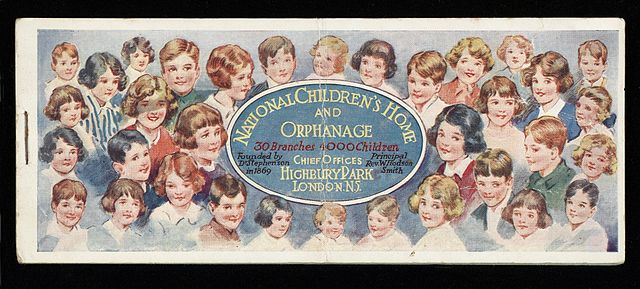
640px-advert_for_the_national_children27s_home_and_orphange-_wellcome_l0040571
Advert for the National Children’s Home and Orphanage. Ephemera Collection National Children’s Home and Orphanage (Great Britain). Published: circa 1920. Credit: Wellcome Library, London. http://wellcomeimages.org. Copyrighted work available under Creative Commons Attribution only licence CC BY 4.0 http://creativecommons.org/licenses/by/4.0/

Unhappy Upbringings

Of course, literary orphans lose more than family when their parents die. For many orphans, parental loss also affects their material, emotional, and social support. However, their new “homes” rarely offer respite or welcome orphaned children—even when they are kin.[††] The orphan’s quest to find acceptance arises in response to this rejection. The trope’s difficulty here lies with the reasons the child isn’t wanted. Literature happens to be littered with cruel, prejudiced or indifferent guardians that range from rotten relations (stepparents, aunts and/or uncles) to unkind orphanage staff. Failing this (or even in conjunction with it), the other common difficulty that necessitates the child’s quest for belonging involves the guardian’s financial distress (Aloma, Anne Shirley from Anne of Green Gables). Of note, Jane Eyre, Harry Potter, and Aloma all lived with aunts and/or uncles before departing to a boarding school. And Jane and Harry both lived with guardian(s) who begrudged them their upkeep, even though they could readily afford their expenses. While some literary orphans manage to find acceptance through self-improvement and changing the status quo (Mary Lennox, The Secret Garden), most do not. Therefore, inventive approaches to writing these characters’ unhappy circumstances is critical when using these common themes.

The Harry Potter series

In the Harry Potter’s series, Vernon and Petunia Dursley’s have few qualms about expressing their displeasure with Harry’s presence in their lives. Rowling, however, complicates their distaste for Harry by rooting it in intolerance and jealousy. Vernon Dursley rather straightforwardly dislikes people unlike himself and wants to curb any magical ability Harry displays, prompting him to take extraordinary measures to prevent Harry from learning he’s a wizard. Petunia Dursley’s motivations, however, are more nuanced. Her sister, Lily Potter, is regularly described in glowing terms (beautiful, smart, kind, etc.), making Petunia one of her rare detractors. She denounces Lily as a freak but in the same scene indicates that their parents admired Lily’s magical ability, exposing her envy. Petunia obviously feels overlooked because her young sister managed to be remarkable in yet another way. She transfers her resentment to Harry, spoiling her son while denying Harry material comforts to ensure Dudley never feels as she did. Regardless of how much trouble Harry causes her, she begrudgingly allows him to stay, suggesting that some lingering duty or love for her sister remains.

Ambiguous Identity and Transformation

Mullan’s observation that orphans are “out of place” gives them the freedom to reinvent themselves and discard their old lives. Although their unfixed social status allows them to transcend their social circumstances, this ambiguity also makes maligning them easy. The same orphan can be classified as both dangerous or brave—incidentally, terms used to describe both Harry Potter and archvillain Lord Voldemort. The orphan’s ambiguous status also provides ample opportunity to create and resolve conflicts in the narrative (a boon for developing story arcs), but such volatility should have a goal (eg, revealing character). Conferring wealth as a reward to the orphaned protagonist, for example, ensures a happy ending but feels unearned when a previously unknown relation exists solely to enrich said orphan by dying.[‡‡]

Jane Eyre

After Jane Eyre endures a punishment that causes her to faint, the kind apothecary caring for her learns that her aunt’s mistreatment caused her collapse. He offers Jane an opportunity to attend Lowood Institution, a school that educates poor girls. The promise of a fresh start, however, soon sours when her Aunt Reed unjustly characterizes her as a liar to the school director. Accepting Aunt Reed’s word without question, he assures them that the staff will be told about Jane’s wicked behavior. Beyond creating conflict and generating future difficulties for Jane, Brontë’s goal here is to provide Jane with a defining moment. With this latest bit of malice, Aunt Reed finally pushes Jane into finally speaking up for herself, an ability she needs to develop since she has no one else to defend her. Jane grows as a character, no longer willing to suffer slights.

Summary

While the orphan trope has its stock characters, genre expectations, and standard plot lines, writers who make these moments purposeful transform an old story into a meaningful discussion about belonging and identity, something every young protagonist (parents or not) considers as they age into adulthood. And that conversation is an interesting one, however many times we have it, when more considered approaches make the story feel new again.

Updated headers on 10 March 2023.

NOTES:

[*] Most orphans (by definition) are children. Adults usually do not identify as orphans unless they lost their parents during childhood.

[†] Contrary to expectation, some orphans prosper without at least one of their parents (eg, Huckleberry Finn). Being spared parental mistreatment, however, neither offsets nor lessens the child’s experience of loss.

[‡] For much the same reason, most orphan characters are only children.

[§] The trend here is also somewhat practical given that pandemics are less common than they once were.

[**] Of note, Aloma lives in a prevalently conservative area of rural Kentucky during the 1980s, where couples were discouraged from living together before marriage.

[††] Rose from Louisa May Alcott’s Eight Cousins is a notable exception where guardian and extended family alike welcome her.

[‡‡] While one can argue that Jane needs to become wealthy to attain equal footing with Mr. Rochester, he already had no objections to marrying her without money and his injuries better serve this purpose.

Coming of Age: Writing and the Continuity of Maturation

With the exception of bildungsroman tales, however, there is no reason the age must be adolescent or the struggles pubescent when we invoke the phrase “coming of age”. After all, rites of passage (eg, graduations, first jobs, parental loss) can occur at many different ages.

Literary Connections

In one of those fascinating moments of literary connection, I stumbled upon a quote that resonated with my own writing:[*]

…“all stories are coming-of-age stories”[†]

I discovered this statement, attributed to Antonya Nelson (author of Female Trouble), in a Q/A session between Karen Russell (author of Swamplandia and interviewer) and Robin Black (the interviewee) that served as an afterwords for Black’s short story collection, If I Loved You, I Would Tell You This: Stories. Russell references Nelson’s remark while discussing Black’s stories, which she notes explore with intensity how characters “come of age” at various points of their life. Concurring, Black relates her view that “coming-of-age” stories are works involving the change from innocence to experience, a process that continues to complicate one’s life. I found myself nodding, as my story-in-progress sprang to mind.

Coming of Ages

But what does a “coming of age” story represent? Usually, we refer to stories focusing on a young person in the process of achieving adulthood. Examples range from a teenager gaining understanding of her mother and harm seen in Nelson’s short story “Primum Non Nocere” to bildungsroman novels (eg, The History of Tom Jones by Henry Fielding), which focus on the development of a youth into maturity (eg, moral, psychological, intellectual).[‡] With the exception of bildungsroman tales,[§] however, there is no reason the age must be adolescent or the struggles pubescent when we invoke the phrase “coming of age”. After all, rites of passage (eg, graduations, first jobs, parental loss) occur at many different ages.

In my intergenerational story, three women’s lives change, with each experiencing a “coming of their particular age”. The youngest member, of course, experiences the more typical coming-of-age moment after leaving college. For her mother, her child’s nascent adulthood revives memories of her own mistakes at that age coupled with current worries that make it difficult for her to accept her child’s choices. And for the grandmother of the group? In addition to supporting the younger women in different ways, she looks toward her own next transition: addressing her own increasingly limited ability to care for herself.

Characterizing Maturation

One of the reasons I’ve enjoyed working with this story is that I felt the characters had opportunities to grow and learn, either by succeeding in their endeavors or by failing. When I read this interview and considered “coming of ages” in my writing, I knew I’d stumbled onto an underlying theme of my story: how families deal with their continuing evolution. In this regard, I felt more kinship with Black’s notion of moving from innocence to experience. Or, as I think of it, the ways in which we move from ignorance to knowledge, learning how to be ourselves at a certain age. It’s worth considering how characters of all ages “come of age”, how they mature through their experiences, when we write. Maturity, as Black notes, may not confer mastery but it makes for a richer tale.

NOTES:

[*] And they were all women authors!

[†] “A Reader’s Guide.” Black, Robin. Interview by Karen Russell. In: Black, Robin. If I Loved You, I Would Tell You This: Stories. New York, Random House, 2011.

[‡] Anne Boyd Rioux discusses female bildungsroman novels, including the contradictory nature of applying this term to female protagonists when such characters ultimately step into their expected social roles instead of pursuing their own dreams. Fortunately, she also lists several nineteenth century novels that flout these limitations here.

[§] By definition, a youth must be involved.

Weather in Writing: a Dynamic Literary Device

Although weather may properly be considered part of the setting, both its ubiquitous effects and changeable nature allows it to extend into plot, characterization and more.

Of late, I’ve been thinking about weather. Being informed about the weather is useful for selecting appropriate outerwear and activities. It even provides us with something to discuss about when we greet people. But when weather appears in fiction (either as exposition or dialogue), it exists to accomplish certain narrative goals. Although weather may properly be considered part of the setting, both its ubiquitous effects and changeable nature allows it to influence plot, characterization and more. In the following, I discuss several selections that demonstrates weather’s versatility in fiction.

Plotting Weather

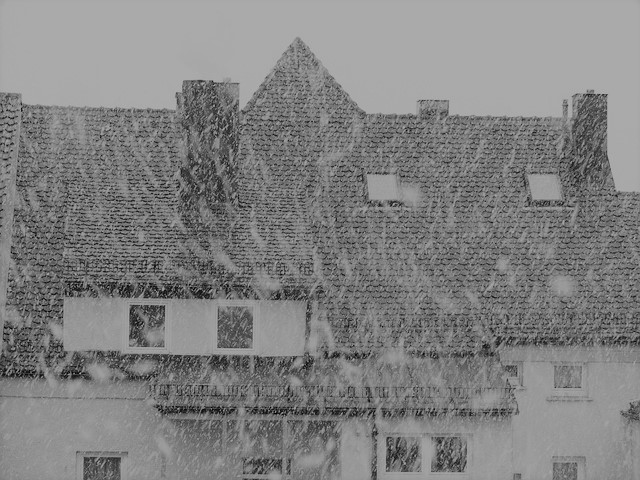
Weather’s pervasiveness and its effect on human lives, of course, is the primary reason it makes an excellent plot device. Stories featuring weather-related catastrophes (from seafaring disasters such as Carol Birch’s Jamrach’s Menagerie to cli-fi dystopias such as Margaret Atwood’s Oryx and Crake) are indebted to the weather for creating their central conflict: survival. These stories frequently rely upon but don’t require epic storms to create a crisis. In Jack London’s short story “To Build a Fire”, harsh winter conditions are normal in the Yukon. The protagonist hikes only with his dog despite warnings to travel in company when it’s dangerously cold. Several mistakes on this frigid day turn this walk into a struggle for life. However, snowfall plays a starring role in creating a very different survival situation in “Three Blind Mice” by Agatha Christie.[†] As forecast by the wireless news, the inhabitants of Monkshood Manor are trapped indoors by a blizzard. Well prepared for the storm, their real difficulty is that one of them is a murderer. However, weather, severe or otherwise, needn’t be life threatening to be a plot point. Although alarming, a tornado’s brief appearance in All the Living by C. E. Morgan merely threatens protagonists Aloma and Orren, reminding them that they need some contact with the world beyond their farm.[‡]

Weather in Writing: a Dynamic Literary Device
The forecast for Agatha Christie’s “Three Blind Mice” is heavy snow and murder.

Symbolic and Moody Weather

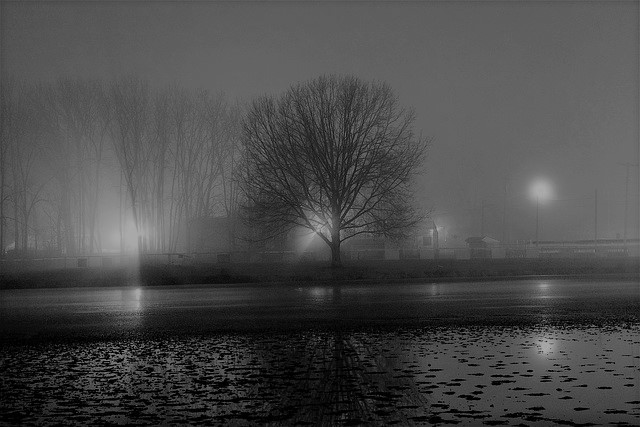
In her article about the role weather plays in literature, Kathryn Schultz discusses how weather went from “mythical to metaphorical”, “with atmospheric conditions…stand[ing] in for the human condition”.[§] Schultz observes that such representations may to refer to individuals, relationships, or societies. Mary Tyrone, a woman suffering from morphine addiction in Eugene O’Neill’s play Long Day’s Journey into Night, declares that she loves the fog because of its ability to conceal the world. Fog, of course, represents the addicted state into which Mary escapes from unpleasant realities such as her son’s illness. The presence of snow in Richard Wright’s novel Native Son, however, works at the societal level. Through much of the novel, Bigger Thomas is surrounded snow, a subtle allusion to how his existence as a black man is circumscribed and controlled by white society.

Weather in Writing: a Dynamic Literary Device
A foggy night, such as might be seen in Long Day’s Journey into Night.

Symbolic or not, weather in fictional works help authors set the mood. How a writer characterizes the weather in a fictional account will dictate the reader’s emotional response. In the opening lines of “The Story-Teller”, we’re told it’s a “hot afternoon” and that “the railway carriage was correspondingly sultry” (129).[**] Already, readers feel the wearying, perhaps irritable quality of this journey even before we learn that the “unsympathetic” bachelor will share an hour’s train ride with three boisterous children and their aunt, a woman who is ill adept at entertaining her charges (129). Similarly, the fog symbolizing Mary’s addiction in Long Day’s Journey also establishes an atmosphere of tension early in the play. Mary remarks that that the foghorn’s warnings kept her awake and unsettled her nerves. Yet, her family (particularly son Jamie) are all too aware that such restlessness is a symptom of her drug use and check for signs of addiction, something which makes her self-conscious and more nervous.

Foreshadowing Forecasts[††]

Scrying the skies for portents of poor weather to modern weather forecasts are among the numerous ways humanity has attempted to tell the future of weather. Yet weather, often working in conjunction with mood, can hint at events to come in fiction. In The Great Gatsby,[‡‡] the warm breeze fills Nick with “the familiar conviction that life was beginning over again with the summer” (8). Nick’s reflection suggests renewal is in the offing: Nick will reacquaint himself with Daisy and Tom just as Gatsby will restart his love affair with Daisy. In a different vein, Zora Neale Hurston presages a devastating hurricane in Their Eyes Were Watching God with several events, among them an animal exodus and the uncanny stillness of the wind. Many, Janie and Tea Cake among them, choose to remain because they think the storm will not be severe. Before he leaves, ‘Lias attempts to persuade the couple to accompany him by stating “dis muck is too low and dat big lake is liable tuh bust” (148).[§§] As predicted, the lake floods, forcing everyone remaining to flee to high ground.

Weather in Writing: a Dynamic Literary Device
In Their Eyes Were Watching God, a hurricane (likely more severe than this particular storm) devastates Florida.

Characteristic Weather

Using meteorological metaphors, as discussed in Schultz’s article, provides information about characters, ranging from physical characteristics to personality traits (replying icily, for example, uses weather to indicate displeasure). Conversations about weather also can reveal information about characters. In Robert Frost’s narrative poem, “Home Burial”,[†††] clashing notions of appropriate grieving coupled with an offhand remark about weather precipitate a rupture. The husband’s clumsy attempts to speak of their dead child infuriates his wife, particularly when he suggests she overly grieves. Infuriated, Amy accuses him of lacking feeling, given how casually (to her mind) he dug the child’s grave (ln71–78) and discussed his “every day concerns” (ln 86):

‘Three foggy mornings and one rainy morning

Will rot the best birch fence a man can build.’

Think of it, talk like that at such a time!

What had how long it takes a birch to rot

To do with what was in the darkened parlor?

You couldn’t care….(ln 92–7)

One can almost hear the door slam at the poem’s close.

Drawing from Weather

Weather’s profound effect on humanity is evident when we examine literary works. Beyond its humble role in the setting, it pervades mood, portrays us, and even “plots” against us, just as it does in real life. Utilized wisely, fictional weather helps underscore the thrust of a writer’s story, adding depth and complexity. And that makes weather a dynamic literary device.

What is your favorite example of literary weather? Share it in the comment section below.

NOTES:[*]

[*] Updated 22 May 2018.

[†] This short story was based on the radio broadcast of the same name. Ultimately, Christie transformed the radio play into the famous West End play, The Mousetrap. Familiarity with either play or story will work for this example.

[‡] They add a television to their home, a sensible decision given that Kentucky is tornado prone (925 tornadoes were observed between 1950 to 2015.

[§] Pathetic fallacy, that is attributing human emotion to inanimate objects in nature, often wears the guise of weather in literature.

[**] Saki. The Best of Saki. London: Penguin Popular Classics, 1994.

[††] I could argue that the hardworking fog in Long Day’s Journey (or at least the foghorn) also foreshadows Mary’s relapse. But, I thought I’d reward this example with the rest of the day off, since it’d already done so much.

[‡‡] Fitzgerald, F. Scott. The Great Gatsby. Cambridge: Cambridge U Press, 1991.

[§§] Hurston, Zora Neale. Their Eyes Were Watching God. New York: Harper & Row, 1990.

[†††] Frost, Robert. Robert Frost: Poetry and Prose. New York: Henry Holt, 1984.

Read it Again, Sam*: Repeat Readers

Part of writing involves the creation of a reading experience.

Goodreads recently rolled out a new feature, one that allowed you to put a “read” book back into your “currently reading” queue, making it easier to acknowledge that you’ve read a work more than once.[†] As a site user and fan of revisiting favorite books, this new feature resonated with me—as well as made me consider re-reading from a writer’s viewpoint. I occasionally think my writing (whether it’s a blog post or poem) is a conversation that I’m having through the written word. And it’s rather exciting to think that someone may well choose to re-read something I penned because they enjoyed “conversing” with me. From this perspective, I became quite curious as to why other people revisit books, stories, and poems again.

Reasons We Re-Read

Arguably, necessity is among those reasons, such as reviewing work-related texts that vary from profession to profession, some of which bears re-reading outside work hours. My education also required me to re-read several books, plays, and poems, sometimes more than once. While I’d be happy to immerse myself in some of those works again, others not so much.[‡] Appearing on multiple teachers’ syllabi, however, suggests a certain greatness of a work—or at least that it’s representative of a style—something that makes it important enough that we’ll see it again.

Most respondents to my poll (hosted here and on Twitter), however, re-read because they enjoy doing so. Fellow writer Sandy Bennett-Haber is a “re-reader of novels” because she finds “comfort in the familiar” and “sometimes because it is just a great story.” Her response dovetails with my reasons for re-reading fiction. I primarily re-read because I enjoyed the story. At other times, re-reading feels very much like a comforting routine. When I read an Agatha Christie mystery again, I know what to expect (regardless if I recall whodunnit) and look forward to that experience. Another reader I informally surveyed indicated he re-read works when he particularly liked a character. The idea that a single character is so well-crafted as to merit a re-read, too, is a compelling reason, one that inspires me to think of ways to make my characters receive such attention.

When Re-Reading Once Isn’t Enough

My poll also revealed that re-readers tend to read a book more than once. I thought briefly about books I’ve re-read multiple times. I often re-read previous book(s) in a series so I can create a seamless reading transition for an upcoming release. Anticipation often colors these re-reading experiences. Yet, certain books draw me to them in a more thoughtful way, in part because their compassion impresses me. I re-read The Last Call (which I discussed here) because it revealed how many viewpoints led to an historical event, something which is helpful thing to recall in contentious times. Still other books reminded me of happy reading experiences. I’m reading favorite books from my childhood to my child: seeing his excitement adds to my pleasure in rereading these books. Now that I’m a more sophisticated reader, I found a few things I didn’t appreciate the first time reading through.[§] As a recent article by Maria Popova reminds us, this goes some way towards the argument that Tolkien and other writers forwarded that children’s literature is just literature. And who wouldn’t want to write something that appealed to wide audience of readers?

Part of writing involves the creation of a reading experience. Whether it’s Edgar Allan Poe’s[**] idea that a short story should produce a single effect on its readers (ie, a singular emotional response) or the multiple experiences that novels produce for us, a writer’s work involves those responses. And it’s those responses, I realize, that make readers truly want to return a text and read again. When I go forward and edit, I want to carry with me the idea that I need to keep this conversation going so that my readers will want to spend time with my writing again and again.

NOTES:

[*] Trivia: This line never was said in the movie Casablanca.

[†] Or twice or who’s counting, anyway? If you use this feature, Goodreads will.

[‡] Why is it always Romeo and Juliet for Shakespeare courses?

[§] I better appreciate the wordplay in Through the Looking Glass than I did when I was younger. I also have the difficulty of explaining it to the young one while sniggering.

[**] In his case, it’s usually horror.

Setting the Table for Family Drama: Writing Dinnertime Conflict

When it comes to stirring the plot, the familial dining table provides numerous opportunities for writers to use this setting to do as much or as little as they need it to do.

Among the most commonly occurring and underrated settings employed in fiction is the dining table. The dinner table serves more than (hopefully) good eats: it provides both place and reason for characters to be together. Relatively few limits exist for such gatherings. The dinner table accommodates routine meals but also can expand (with a leaf or two) for a holiday party or become several tables at an awards ceremony. Locations also are flexible: I’ve recently set the opening of a story at a patio table during a birthday barbecue. Impromptu celebrations such as promotions, too, might result in an outing to a favorite restaurant. Since mealtimes can occur at any point in the plot, so long as it makes sense for people to eat, the dinner table represents one of the most versatile settings that writers can use to creates scenes, forward the plot, and/or explore the central problem of a story. While these tables can appear in innumerable story types, I will discuss how a few of my favorite authors set the table when writing about families.

Mischief Managed: Rowling’s Kitchen Table

For these stories, setting the action at the dinner table can be quite natural. After all, families often are urged to dine together: shared meals are touted for strengthening familial bonds as well as providing a host of positive benefits. And who wouldn’t want to dine with their loved ones? However, even tight-knit families experience their moments of discord. Featured prominently in the Harry Potter series, the Weasley family is considered a loving one.[*] Harry Potter’s first breakfast at their home, however, is rather tense. Concerned that Harry hadn’t replied to their letters, Ron, Fred, and George Weasley decide to use their father’s enchanted car to rescue Harry from his relations (it was a cloudy night) and sneak him into their home undetected. Unluckily for them, Mrs. Weasley observes both absent boys and car and upbraids all parties for their irresponsibility save the relatively blameless Harry. Mrs. Weasley is somewhat mollified when her sons tell her of Harry’s hardships, but she isn’t one to let them escape having any consequences because their intentions were good: they have chores to do. She sends them outdoors to sort out garden beds before they get the chance to nap. (Rowling 24–41).

Rowling accomplishes quite a lot in these pages besides removing Harry from an unpleasant situation (and thus moving the plot forward). Harry, long accustomed to his aunt’s and uncle’s tendency to condone and excuse his cousin’s bad behavior while punishing him for mere infractions, sees Mrs. Weasley appropriately scold her children for engaging in a risky activity. His subsequent meals at the Burrow, where he is welcomed at the table and in which Mrs. Weasley attempts to feed him up (the Dursleys begrudge him every morsel ), are new experiences for him.[†] Escaping to the Burrow introduces Harry to how loving families work. More telling, though, is the contrast that reader sees between Harry’s home life, which is arguably neater, wealthier, and unhappier (Rowling 1–42). Rowling underscores the point that judging people’s worth by mere appearances or their wealth is fallacious. What makes people worthy is the how they treat each other. It’s little wonder that Harry would rather spend his summers in the happy chaos of the Burrow.

Mystery, Misery and Murder at Christie’s Banquets

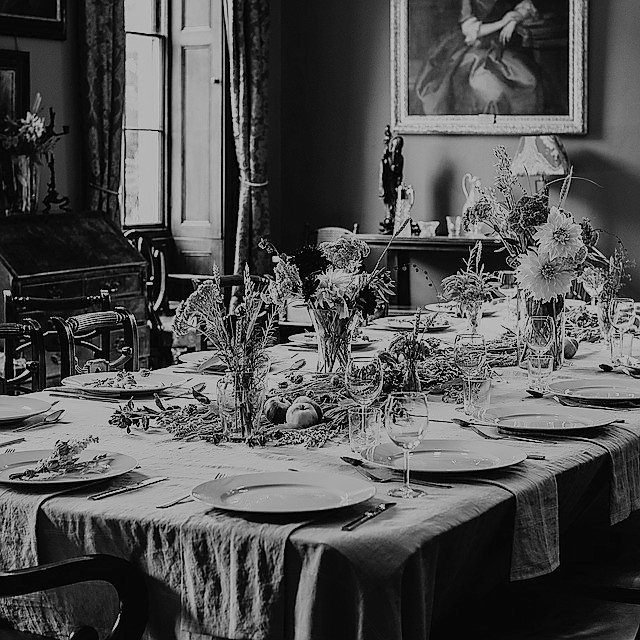
Manor house banquet tableFor unhappy families, however, the potential for tension at the table is extensive. Agatha Christie, a master of the manor house mystery, frequently seats her characters at a formal dining table. Since her mystery novels often involve the murder of a wealthy benefactor to various family members (money and resentment making excellent motivations), mealtimes can be quite intense. The dinner table, being an obliging sort,[‡] works as both setting and opportunity for narrative exposition. In “The Second Gong”,[§] dinner guests and family members alike almost race to the dinner table to ensure they arrive punctually because their host, Hubert Lytcham Roche, notoriously despises lateness. His tardiness is so unprecedented that his guests and butler are stunned and hardly know how to proceed. Shortly thereafter, they find Hubert dead. Here, the table works in two ways: it reveals aspects of Hubert’s character (his controlling, unyielding nature) and gathers all the principal suspects together. In A Pocket Full of Rye, however, the dining table serves as the murder scene: Rex Forestcue, a rather nasty man, is poisoned during breakfast whilst surrounded by suspects—er, family members—all of whom had both motive and opportunity to kill him. In novels such as The Mysterious Affair at Styles, Christie uses the dinner table to review the case and acquire background information: Captain Hastings, a guest at Styles Court, and Hercule Poirot discuss the murder of Emily Inglethop during breakfast on at least two occasions, which affords Poirot the opportunity to question persons present about events surrounding the murder (for which he was not present) and gather clues.

Gaiman: What the Monster Made for Dinner

Of course, not every family need be wealthy (or murderous) to be unhappily seated together at the table. From the outset of The Ocean at the End of the Lane, it seems clear that the seven-year-old protagonist’s parents don’t relate to their bookish boy. Neither mentions his kitten’s death after it occurred, not even to offer consolation. The boy doesn’t share his disappointment about receiving the unsuitable replacement cat with them, anticipating (correctly, I suspect) that his parents won’t understand that the hurt remained new cat or not (Gaiman 14–16). During another incident, his older self (who narrates the events) observes that he only consulted adults as a child when he absolutely must (Gaiman 63), suggesting that the boy already expects adults to be reluctant to help him. Understandably Gaiman’s protagonist is terrified when he realizes that his new childminder is an actual monster. He sits at the dinner table on two occasions, hungry but afraid to eat what the monster made for supper (Gaiman 82, 90–92). Beyond their immediate horror, these moments reveal a larger pattern in the novel: the powerlessness of children. It’s all too easy for the monster to portray the boy as truculent, making his protests seem…childish. The boy, already aware of how easy he is to discredit, knows he cannot expect his parents to believe or assist him. Gaiman captures this bitter aspect of childhood, its impotence, and allows it to be the force that drives his narrative by seating a child at a table.

Setting the Table for Family Drama

When it comes to stirring the plot, the familial dining table provides numerous opportunities for writers to use this setting to do as much or as little as they need it to do. It can serve as a mere setting, providing the appropriate backdrop to the story at hand or cleverly reveal information about characters. Often, scenes from a dining table allow writers to connect to larger themes they explore, both for their stories about families and elsewhere. As such, it might not be such a bad idea to set characters down for something to eat and see what happens next.

Do you have a favorite mealtime scene from a story or book? Share what you liked about it in the comment box below. Also, sign up for the Sequence’s newsletter and keep current with the latest posts.

NOTES:

[*] At this point, the Weasley family’s problems lie more with financial constraints and the odd personality clash versus actual deep disagreements with each other.

[†] Harry, much like Jane Eyre before him, represents a tragic form of the poor relation: the orphaned and presumed penniless child required to live under the guardianship of uncaring relations.

[‡] Unlike the murder victim.

[§] For anyone besides me experiencing a bit of literary déjà vu with this story, it’s useful to know that Christie later rewrote and expanded this story, which she called “Dead Man’s Mirror”. I’m working with the original because I like its simpler plot. Having said that, Christie’s work can feel familiar in places because she reuses elements such as nursery rhymes (“Sing a Song of Sixpence” is one I’ve noted in a few stories), themes, and motivations (typically, money).

Works Cited

Christie, Agatha. The Mysterious Affair at Styles: the First Hercule Poirot Novel. New York: Berkley , 1990.

Christie, Agatha. A Pocket Full of Rye. New York: Signet Book, 2000.

Christie, Agatha. “The Second Gong”. Witness for the Prosecution, and Other Stories. New York: Berkley , 1984.

Gaiman, Neil. The Ocean at the End of the Lane. New York, NY: William Morrow, an imprint of HarperCollins Publishers, 2016.

Rowling, J. K. Harry Potter and the Chamber of Secrets. New York: Arthur A. Levine , an imprint of Scholastic Press, 1999.


Reading Past and Future

Ready to read in the new year

Generally speaking, I avoid the whole “new year, new me” resolutions that plague the early days of January. In my part of the world, January tends to be cold and grey with a chance of snow. After the merry and bright of the darkest nights of December, January already feels like the morning after the night before.[*] Why add the pressure of life-changing resolutions?

To be fair though, I have the bookworm’s long-standing goal to read more, regardless of which part of the year it is. It’s been a rather poignant plan at times, when I haven’t had enough free time to read deeply the way I wanted to do or the focus when I did have time. In 2016, however, I felt like I read many amazing books, although I always wish for more time to read more.[†] With that in mind, I’ve compiled a list of the notable books I’ve read (links are to posts that discuss these books).

Since I’m making lists, I thought I’d consider books for 2017 as well. Normally, I let my birthday and Christmas presents[‡] dictate the books that I plan to read for the upcoming year, and I find other books that interest me as the year progresses. I am, however, hoping to get a few suggestions from my readers. Please feel free to post your suggestions in the comment box!

2016 Notable Reads[§]

The Vegetarian by Han Kang

Winnie-the-Pooh by A. A. Milne[**]

The House at Pooh Corner by A. A. Milne

The Blind Assassin by Margaret Atwood

The Lovely Bones by Alice Sebold

The Complete Sherlock Holmes by Sir Arthur Conan Doyle

If I Loved You, I Would Tell You This by Robin Black

Jamrach’s Menagerie by Carol Birch

Sleeping Embers of an Ordinary Mind by Anne Charnock

The Kitchen God’s Wife by Amy Tan

The Joy Luck Club by Amy Tan*

The Curious Incident of the Dog in the Night-Time by Mark Haddon

2017 To-Read List

All the Living by C. E. Morgan

Life of Pi by Yann Martel

The Help by Kathryn Stockett

Howard’s End by E. M. Forster

The Secret Life of Bees by Sue Monk Kidd

Bad Feminist by Roxanne Gay

Les Miserables by Victor Hugo[††]

Beloved by Toni Morrison

Take Off Your Pants! Outline Your Books for Faster, Better Writing by Libbie Hawker

Read a good book lately? Share your reading recommendations in the comment section below! Also, sign up for the Sequence’s newsletter and keep current with the latest posts!

NOTES:

[*]For some of us, this might be literally true on New Year’s Day.

[†] Just like that guy in the Twilight Zone episode.

[‡] Nothing is sadder than when you DON’T get books for a present.

[§] I’ve read more books than are listed here, but these are the ones that truly stood out as I was putting this list together. Some of these books are also re-reads.

[**] I still can’t believe I’d not read either of these books as a kid.

[††] I’ve actually been trying to read Les Miserables for ages. The problem is it’s so long that I start losing the plot when I put it down. I’m working on finding time to read it uninterrupted so that I don’t lose where I am.